Dressing for Cold Weather
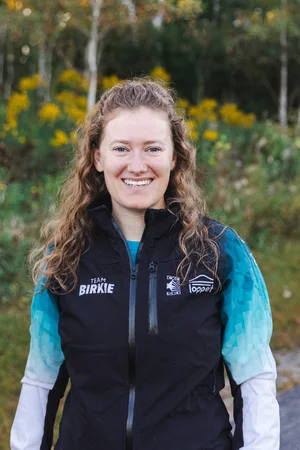
Emma checking in after a cold weekend at the Ski de She in Cable! The Ski de She is always one of my favorite weekends of the year because it brings together an amazing group of women who love to ski! Over the past few years, the Ski de She seems to always fall on the coldest weekend of the year. While we actually got to race in above 0F temperatures this year, I’ve spent a lot of time over the last few days thinking about how to dress to ski in cold temperatures. Luckily, growing up in Northern MN and skiing at Mt. Itasca (the coldest place on earth) for so many years, I’ve learned a thing or two about how to deal with the cold. Here’s what works best for me:
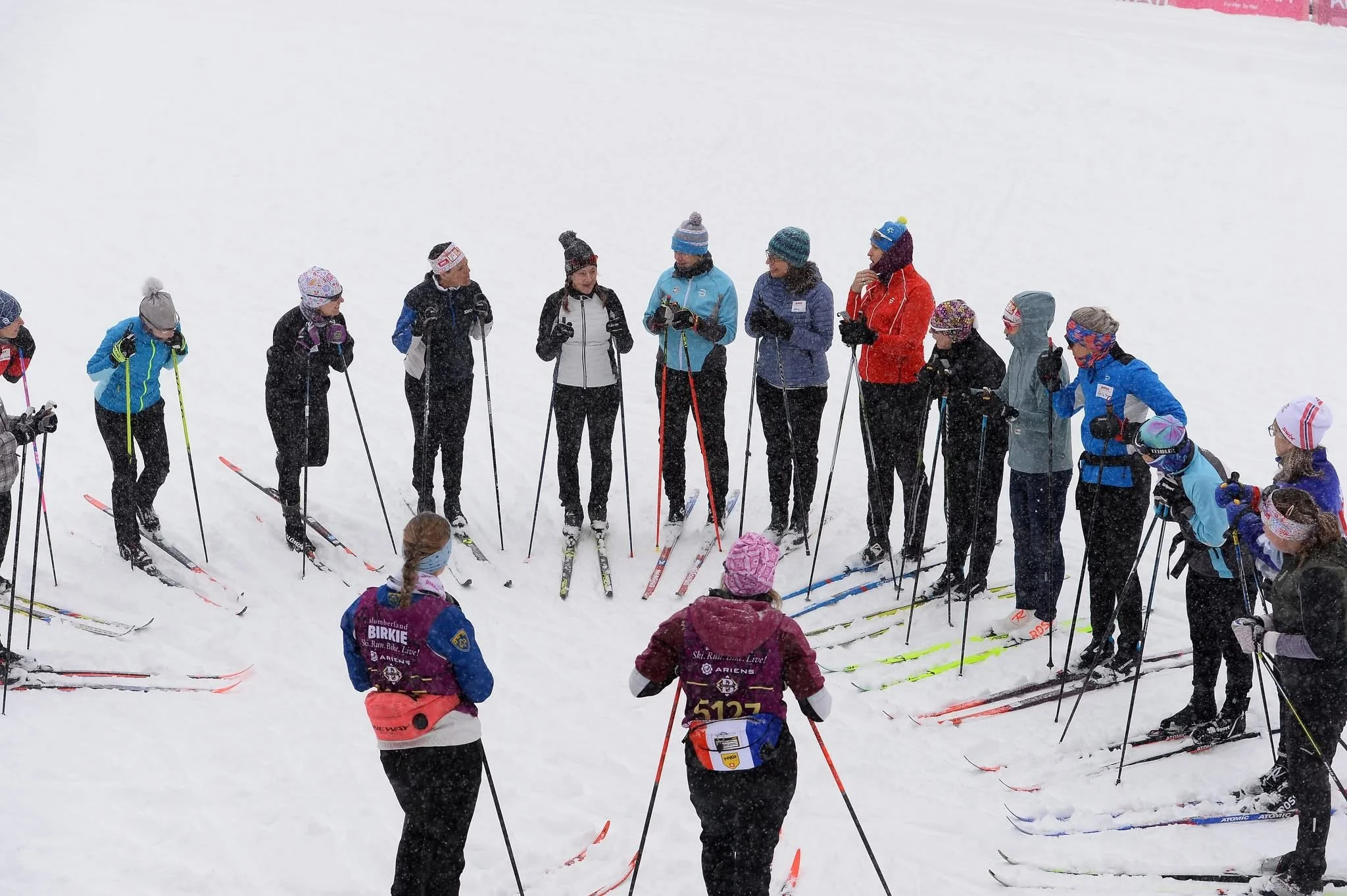
Braving the cold for a classic technique session at the Ski de She
Upper Body:
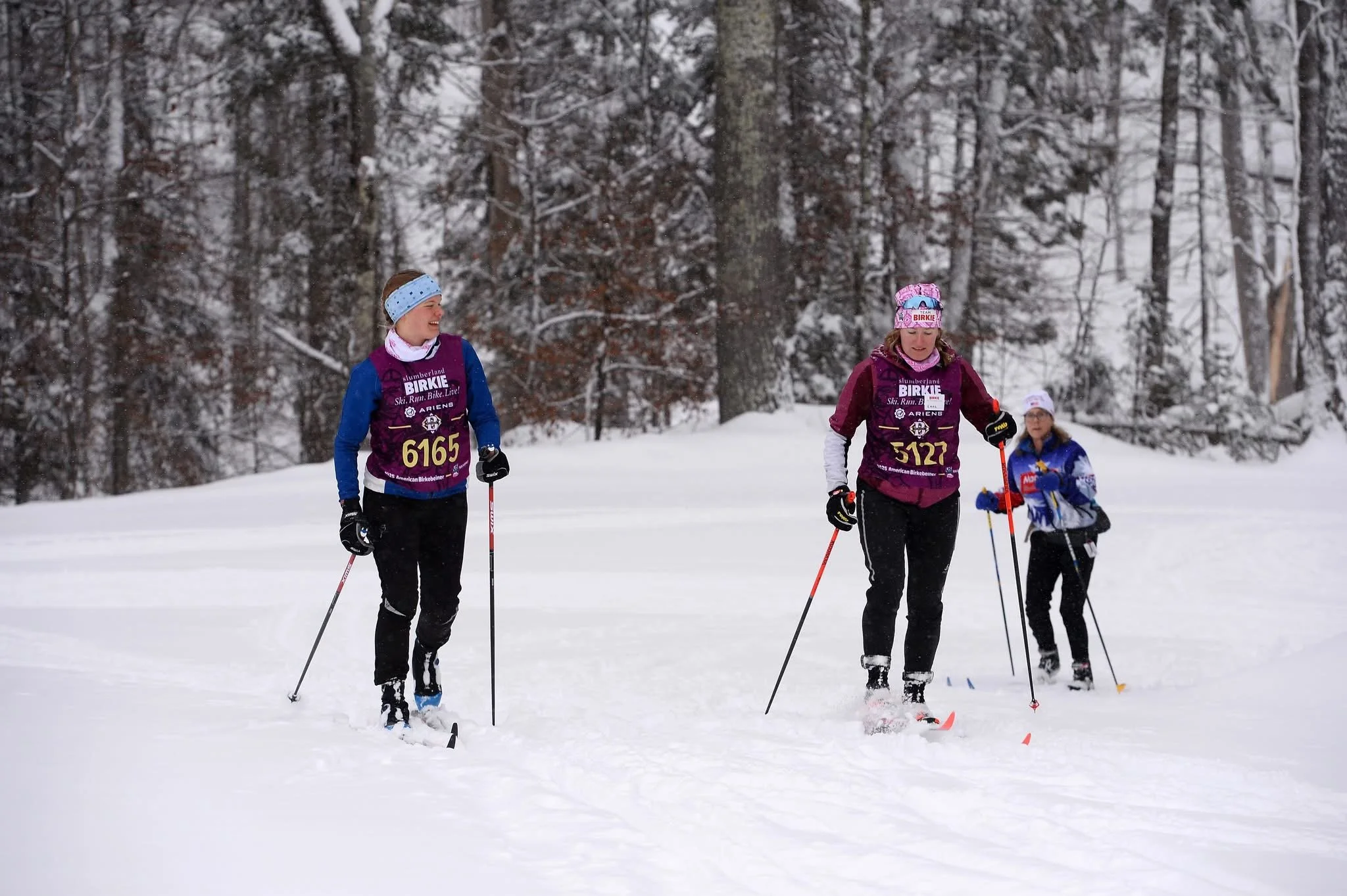
A puffy vest on top of a ski jacket gave me extra warmth while coaching
Dressing for cold weather skiing is all about layering and I always start with a warm, moisture-wicking base layer. I like merino wool for cold days. If you don’t have a super warm base layer, you can double up two lighter layers. I will then layer jackets and vests based on conditions. If it’s a windy day and I’ll be skiing easy the whole time, I will wear a light puffy jacket or vest with a wind-proof jacket on top. If I know I will be doing intervals or expect to get warm while I ski, I will wear a normal ski jacket with a puffy vest on top that can be easily removed as I get warmer.
Lower Body:
I dress my lower body pretty similar to my upper body, starting with a warm wool or fleece lined baselayer. I then choose a warmer, wind-proof pair of ski pants to go on top. If it’s really cold and I’m not going to be skiing very hard, I might even add a short down skirt or puffy shorts to really keep myself warm!
Hands and Feet:
Fingers and toes can be some of the hardest body parts to keep warm on a cold day. I’m sure we’ve all had the miserable feeling of your hands thawing after a cold ski and want to avoid it as much as possible! The first thing you need to do to keep your extremities warm is to keep your core warm. If your body is working really hard to keep your arms and legs warm, it’s never going to be able to spare enough blood to send to your fingers and toes! Glove choice is also very important for keeping your hands warm. Keeping multiple fingers together by wearing lobster gloves or mittens is often the first step to having warm hands. I find that the Toko Thermal Split Mitt and Polar Race Mitten are both trusty options for keeping my hands warm on the coldest days. If you’re a biathlete, or just really like wearing fingered gloves, taping handwarmers to the inside of your wrists can also help keep your fingers warm.
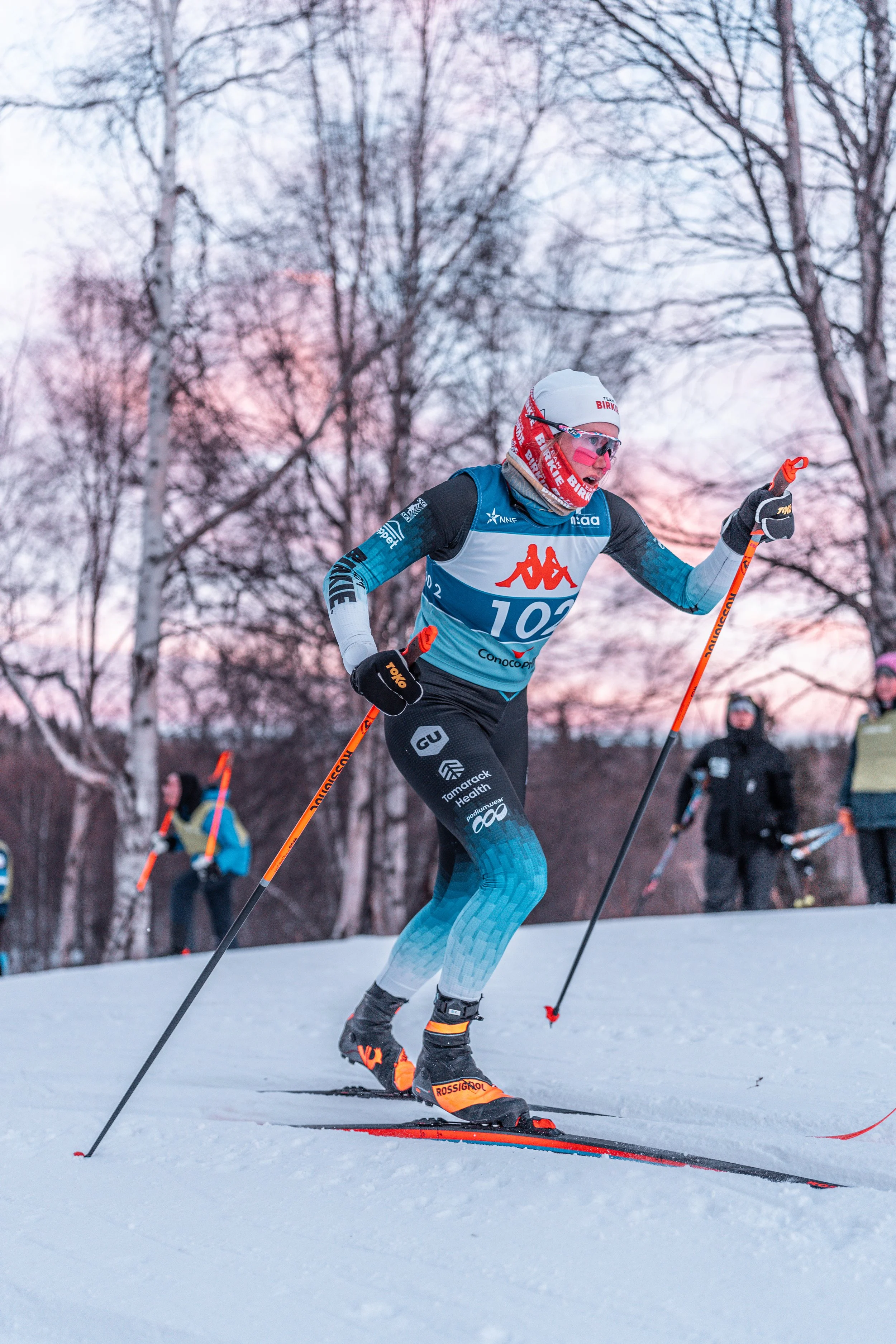
All the cold weather essentials for racing in Alaska last year!
On top of glove choice, having multiple pairs of gloves for one session can also be helpful. I like to bring a dry pair of gloves to cool down in after cold interval sessions and races. Usually, once I start going hard and my hands warm up, they get really sweaty and if I don’t change gloves before I go cool down, all that sweat freezes in my gloves and my fingers turn into icicles.
Toes are also hard to keep warm on a cold day, especially when ski boots only allow your socks to be so thick. If you have space in your boots, sticking toe warmers to the tops of your feet can help keep your toes warm. Boot covers are also great for keeping a little extra warmth in the feet on super cold days.
Head, Neck, and Face:
You lose a lot of heat through your head so wearing a hat is a must on cold days! The colder it is, the thicker you want that hat to be as well. I find that most ski hats don’t like to stay down over my ears so I usually pull my buff up over my hat to help keep it in place. I’ve also started wearing two buffs when skiing easy on super cold days so that my neck stays warmer and I have a loose buff to pull up over my face if it gets super cold.
To protect my nose and cheeks, I always wear face tape when it is below about 5 degrees Fahrenheit. I also always wear glasses to protect my eyes from the cold air. I then fill in any pieces of skin that are still exposed with WarmSkin or Vaseline. I’ve learned that putting WarmSkin on 10-15min ahead of time and giving it time to soak in often works better than applying it right before you go outside.
Skiing in cold weather can be daunting but with the right preparations, you can stay warm and safe! It’s all about finding what works best for you, which unfortunately takes some trial and error. Hopefully, you can use some of my advice and stay a bit warmer next time you go out for a ski on a cold day. Once you’re done skiing, change into some dry warm clothes, grab a hot beverage, and relax knowing that you’re tougher than most people for willingly going outside in the cold. And remember, when those Polar Vortex temps inevitably hit us every January, there’s no shame in moving a few workouts inside!

Nothing is better than warm dry clothes after a cold race!