
Bouncing Back From Overtraining
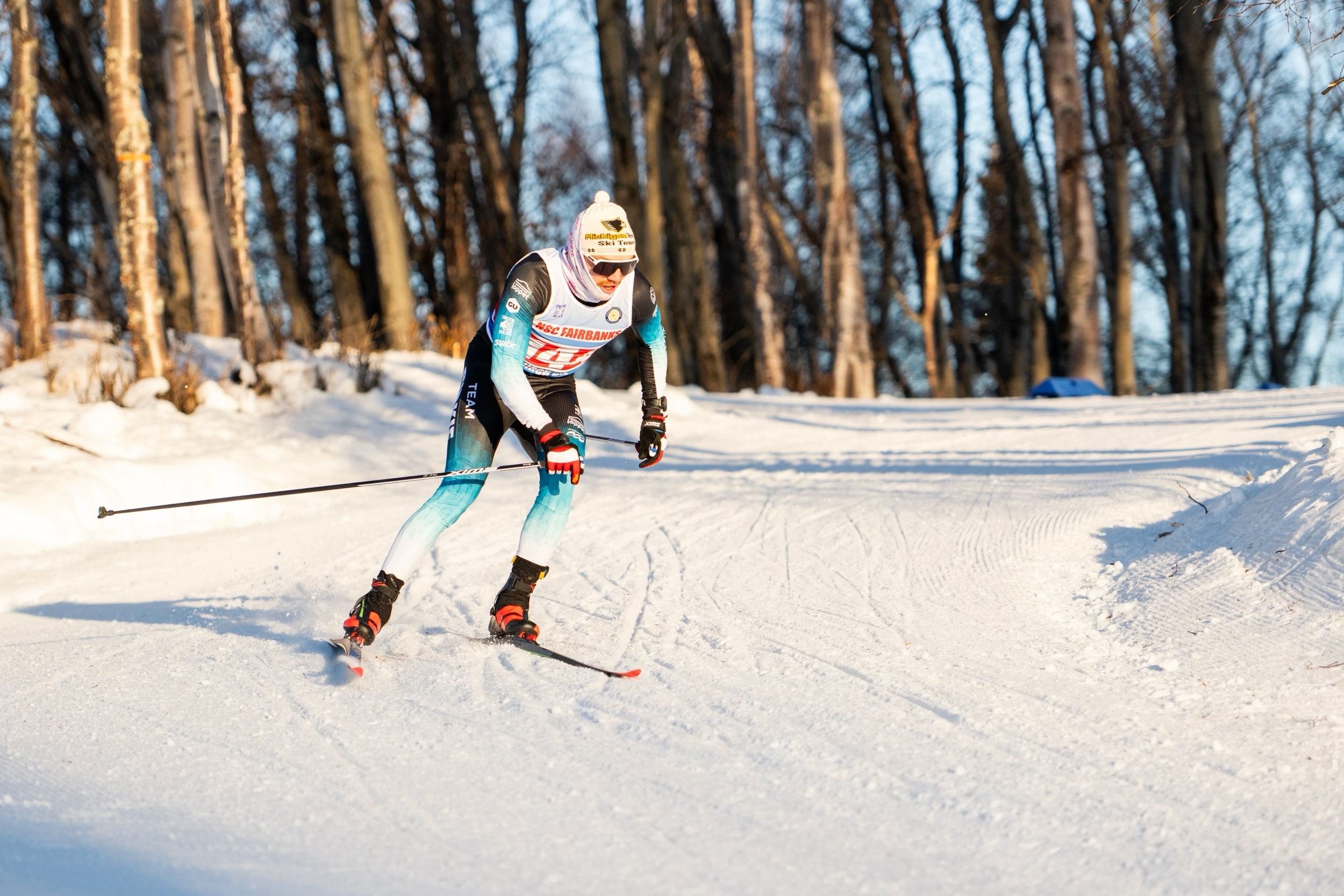
Skate 13k in Anchorage. Photo credit: Colton Haataja
As a cross-country skier, we spend about eight months of the year training to be fast for the remaining four. Most of that time is fairly repetitive, and as you adapt, your body gets used to the load. However, I think the final month before the season starts is the hardest to get right, both physically and mentally. At that point, you have completed all your base training and begin to dial back the volume and ramp the intensity.
To throw a wrench into the works, as a first-year pro this is the first year where performing well in December and January is one of the most important parts of the season. Throughout college, racing well in January matters, but the main goal is peaking for NCAA Championships in March. The shift from building toward a peak after weeks of racing to needing to jump straight into racing in good shape is a new challenge, and one I did not quite nail this year.
Typically, in college, you start adding more L4–5 training throughout the fall to gear up for race season, and then racing itself becomes part of the fine tuning process. You essentially race yourself into top shape. On the SuperTour schedule, however, the first two periods are the most important for World Cup qualification. That means fewer races and limited time on snow to prepare for the two most important blocks of the season.
Unfortunately, I let this get into my head and found myself slightly overcooked during Period 1 of the SuperTour in Alaska. After altitude camp in Park City, more L4/5 was added into my training, but I did not back the overall volume down enough to manage the load. Instead of sharpening up, I dug myself into a bit of a hole right before the race season. I probably knew in the back of my mind that a little rest would be beneficial, as some of the intensity sessions did not feel quite right. It is easy to get sucked into training and not listen to your body in situations like this, and honestly that is probably my biggest weakness. Still, it is part of the learning process of understanding what is right for your own training.
During Period 1 in Alaska, I did not have the same race feeling I normally do. I felt low on energy and lacked the usual drive to race. I think the mental excitement to race is a big indicator of how well rested and ready you are. On top of that, my max heart rates in races were 8 to 10 bpm lower than normal, which was another red flag that I needed some time off.
I went back home to Park City for Christmas and, with guidance from the coaches, I tried doing just some easy skiing to see if a few lighter days would be enough to bounce back. However, I was too far into the hole and needed real rest. I ended up taking four full days completely off. My first workout back was 60 seconds on, 30 seconds off L3 session to test how my body felt. The workout was fine, and I had a bit more drive, but I did not feel amazing. I spent the rest of the day trying to decide whether more rest or easing back into training would be more beneficial, and I decided that a few days of easy skiing made the most sense.
The next day was Christmas, and my family went up to Bonanza Flats for a small Christmas ski. Conditions were not great due to all the rough weather we had been getting, but I was surprisingly happy just being out there with my family and my friend Lane. That is worth noting, because I think enjoying skiing and being happy on skis is crucial to racing fast. That was when I realized I might finally be starting to feel better.
From there, I focused on doing training that sounded both enjoyable and productive. I jumped into an interval session around my old high school club. It was an easy L3 session, but it was nice to get some cheers from my old high school coach. The following day, a storm finally came through and made the skiing at Bonanza Flats quite dreamy. Skiing there with friends, family, sunshine, and my dog brought the enjoyment and excitement to race back. It was hard to stop skiing.
From that point on, it has been continuing the resting mindset and listening to my body as I try to find my shape heading into Senior Nationals in Lake Placid this coming week.
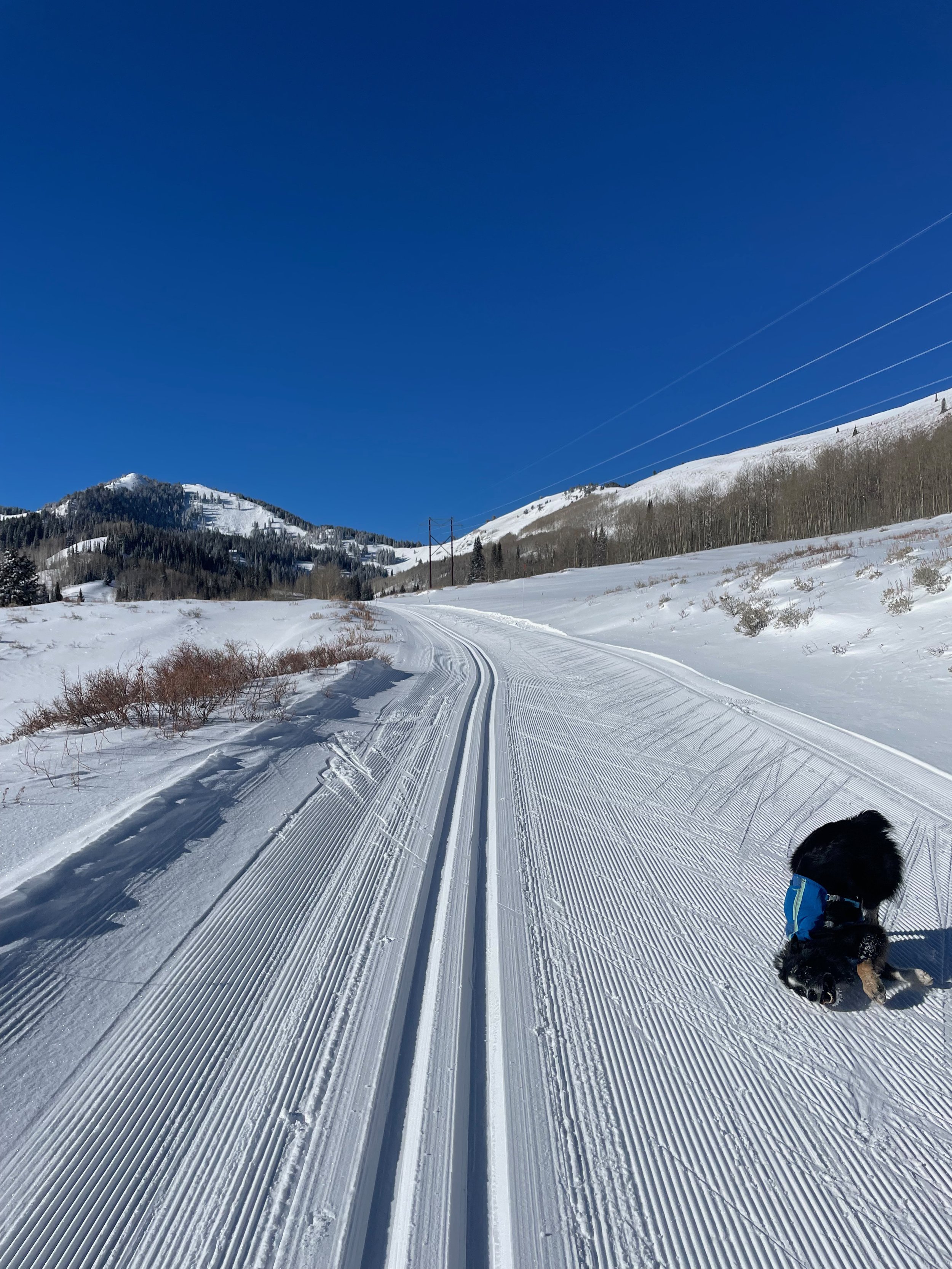
My dog jack loves to be a seal on the snow