
Don't Snap a Pole: The Essentials of Ski Travel
Traveling for a cross country ski race or training camp presents a unique challenge. While most travelers worry about fitting enough clothes into a carry on, we are trying to figure out how to transport poles and multiple pairs of race skis without anything getting damaged in transit.
Growing up in Alaska and racing collegiately in the Midwest gave me plenty of experience hauling gear back and forth on long plane rides. Over the years, I’ve learned that packing for a ski trip is all about planning. It requires sorting through your gear days in advance to decide exactly what you need to bring and what is fine to leave behind. Personally, I like to travel with two checked bags and a carry on: a large ski bag, a large duffel, and a small backpack. This is enough space for me to have everything I need all without being overweight with any one of my bags.
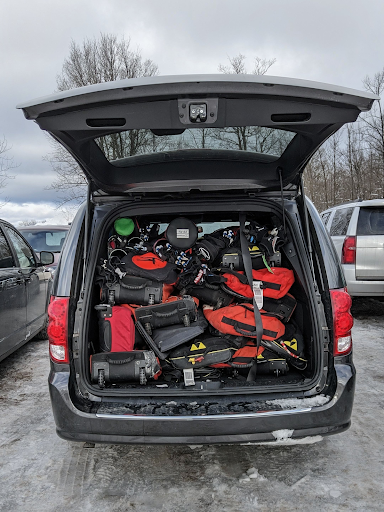
How not to pack a van
I always start by packing the ski bag first. A high quality bag is essential, I use an 8 pair Fischer bag, but any large bag that fits everything you need works. I pad the tips and tails of my skis with my training clothes using puffy jackets and base layers as "bubble wrap" not only saves space in my duffel but adds a critical layer of protection for the gear that matters most. For trips without a direct flight, I usually take the bindings off and tape my skis together, so they are extra protected during transfers. I’ve found that even with 8 or 9 pairs of skis, I can still fit my pole tube into the bag. The major thing to watch for is the airline’s weight limit, most adhere strictly to a 50 pound limit, and going over will cost you. As for the duffel, that’s where I pack the rest of my clothes and my ski boots.
To keep myself entertained during long travel days, I make sure my carry on is well stocked. Besides essentials like critical medication and ID, I always bring my laptop and noise canceling headphones. I also pack a dedicated tech pouch with a battery bank and various charging cables (don’t forget the watch charger!). Alongside the tech, I keep easy access snacks like trail mix or granola bars in the front pocket to hold me over if I get hungry.
Finally, don’t forget the wax kit. While coaches usually bring the main supplies, I keep a "triage" kit accessible if I'm traveling to a place with unpredictable support. This includes a cork and a small selection of kick wax. Depending on what will be available at the venue, I sometimes will also pack a small amount of travel wax so I can rewax my skis before the flight back.
One aspect of travel I take just as seriously as the gear is my health. As an endurance athlete, my immune system can be a bit fragile during peak training blocks, and the last thing I want is to pick up a bug in a crowded terminal right before a competition. I always travel with a high quality face mask, typically an N95 or KN95. I put it on before I enter the airport and keep it on throughout the flight. I also like to carry a small bottle of hand sanitizer to use before I eat. These small habits are all part of staying healthy and arriving healthy is the first step to racing fast.
Packing for a ski trip takes practice, and it inevitably involves lugging awkward, oversized bags up and down escalators and through snowy parking lots. But when you finally arrive at the venue and click into your bindings on fresh snow, all the logistical headaches of the airport fade away. Hope you find some good snow out there wherever you are, happy skiing.